Turing patterns: Holes
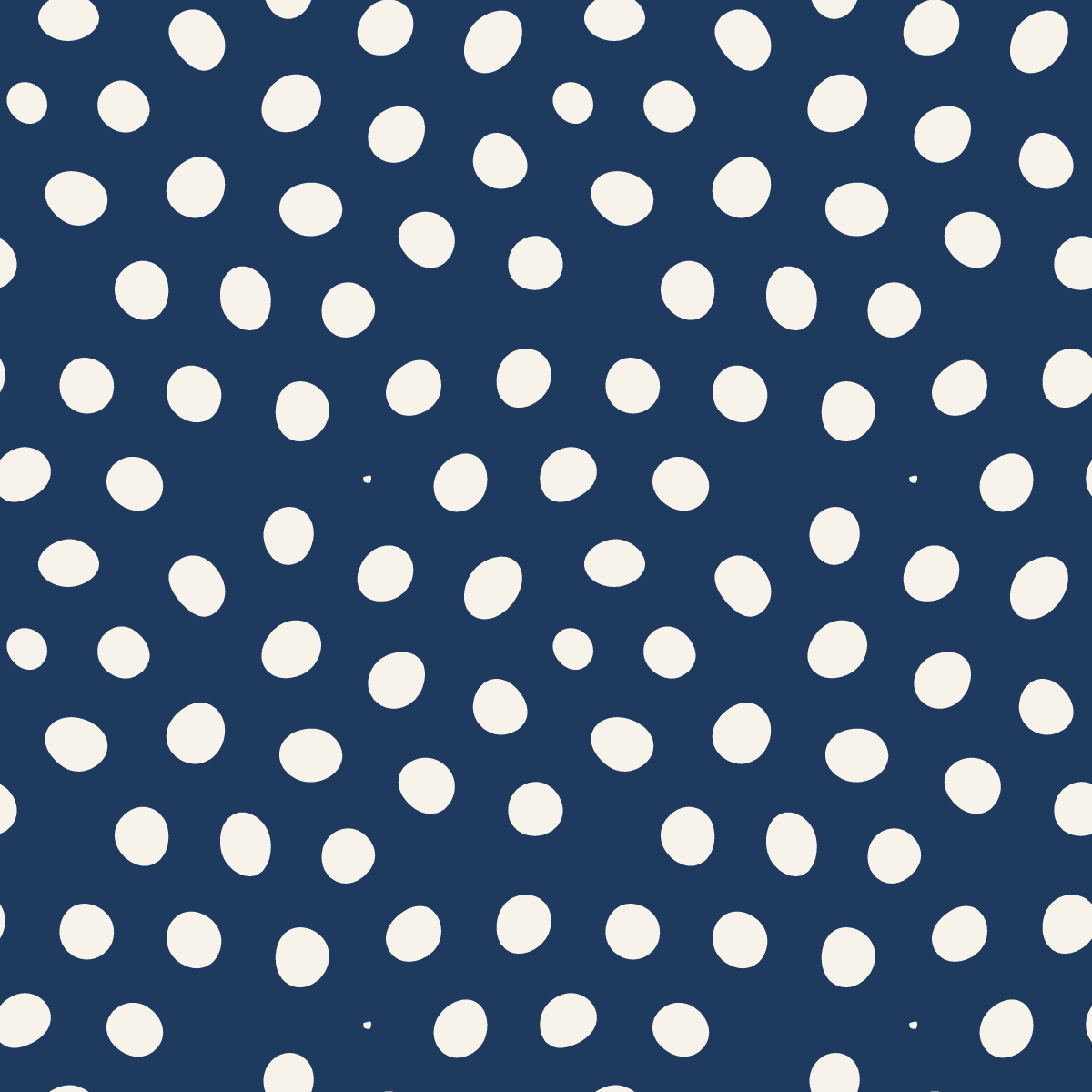
Two chemicals spread and react on a grid that wraps around, and spots, stripes or mazes grow on their own. Pick a preset, set how it grows, then download a seamless repeat.
How it works
This is the Gray-Scott model. Chemical A is fed in everywhere, B turns A into more B, and B is slowly removed. Both spread to neighboring cells, A twice as fast as B. The feed and kill rates decide what grows: John Pearson mapped them in 1993, and each preset is a pair from a different region of his map. The grid's edges join up, so the pattern grows on the surface of a doughnut, and the repeat has no seam to hide.
Sources
- John E. Pearson, Complex Patterns in a Simple System, Science 261, 1993. The feed and kill rates behind the Turing pattern presets come from the regions of this paper's map of the Gray-Scott model.
- Karl Sims, Reaction-Diffusion Tutorial. The Turing pattern maker's simulation step: the diffusion rates, the 3 x 3 Laplacian, and the mitosis and coral rates.